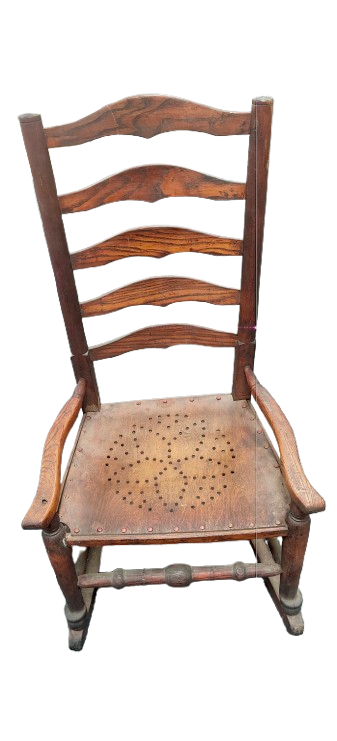
Antique 19th Century Handcrafted Farmhouse Ladderback Rocking Chair (Cherry & Oak)
Description:
An authentic early 19th-century country farmhouse rocking chair, masterfully handcrafted using a combination of rich cherry wood and solid oak. Characterised by its classic ladderback splat construction and turned side posts, this piece displays subtle transitional elements reminiscent of early Arts & Crafts vernacular woodwork. Offering both rustic charm and gentle motion, it makes a striking statement piece in both period cottage interiors and modern rustic spaces.
Key Features & Specifications:
-
Era: Early 19th Century (c. 1800–1840)
-
Style: Country Farmhouse / Early Vernacular (with Arts & Crafts influences)
-
Materials: Solid Oak & Mixed Native Hardwoods (featuring Cherry wood)
-
Construction: Mortise-and-tenon joinery, hand-turned posts, sculpted ladder rails
-
Condition: Solid period condition with a warm, natural aged patina and minor surface wear consistent with over two centuries of honest domestic use
History of Handcrafted Country Furnishings & Ladderback Chairs
-
The Rise of Vernacular Country Furniture: Prior to mass industrialization in the mid-19th century, rural home furnishings were built by village joiners or local carpenters using locally harvested timbers like oak, ash, beech, and cherry. Rather than copying formal metropolitan patterns, rural craftsmen prioritized longevity, comfort, and practical beauty—a genre known today as "vernacular" furniture.
-
Origins of the Ladderback Design: The ladderback (or slat-back) chair structure dates back to medieval Europe, valued for its light weight and exceptional strength. Horizontal wooden slats shaped like ladder rungs were steam-bent or hand-carved to cradle the spine, providing flexible support without requiring heavy upholstery.
-
Evolution of the Country Rocking Chair: Attaching curved wooden rockers to four-legged chairs became widespread across rural England and Colonial North America during the late 18th and early 19th centuries,rocking chairs quickly became a staple of domestic fireside living.
-
Precursor to the Arts & Crafts Movement: In the late 19th century, pioneering designers like William Morris looked back at unpretentious 1800s country furniture as the gold standard of honest craftsmanship. The visible joinery, unadorned timber, and functional simplicity seen in early ladderback chairs directly inspired the foundation of the Arts & Crafts movement.
Styling & Care Recommendations
-
Placement: An ideal accent piece for a fireside hearth, reading nook, bedroom corner, or wide hallway.
-
Maintenance: Preserve the rich patina by buffing occasionally with a natural beeswax polish. Keep away from direct heat sources like radiators to prevent timber shrinkage or joint dryness